Combined Science grade calculation has become a crucial concern for GCSE students and parents following the 2025 results day which showed 21.9% of exams awarded grade 7/A or above. The double science grading system used for Combined Science Trilogy courses creates unique grade combinations that differ from single GCSE subjects, requiring specific understanding of assessment methods, grade boundaries, marking schemes, and point calculations. AQA, OCR, and Edexcel exam boards each implement standardized grading procedures for Combined Science that produce two separate grades from six paper assessments covering Biology, Chemistry, and Physics content areas. The 9-1 grading scale introduced in 2014 continues to apply to Combined Science qualifications, with 67.4% of grades achieving pass levels at 4/C or higher in 2025, demonstrating the grade distribution patterns and assessment standards that influence final grade calculations across all exam board providers and international GCSE variants.
The Double Grade System Explained
Combined Science GCSE awards two separate grades ranging from 9-9 (highest) to 1-1 (lowest), reflecting the double qualification nature of this science course. Unlike single GCSEs that award one grade, Combined Science recognizes the equivalent academic value of studying three science disciplines within one qualification.
Grade combinations follow specific patterns, with higher achieving students receiving grades like 8-8, 9-8, or 8-7, while lower performers might achieve 4-4, 3-3, or 2-1 combinations. The two-grade system accounts for the extensive content coverage across Biology, Chemistry, and Physics.
UCAS points and university admissions typically treat Combined Science grades as two separate qualifications, making the grade calculation particularly important for post-16 education planning and career pathway decisions.
Assessment Structure and Paper Weighting
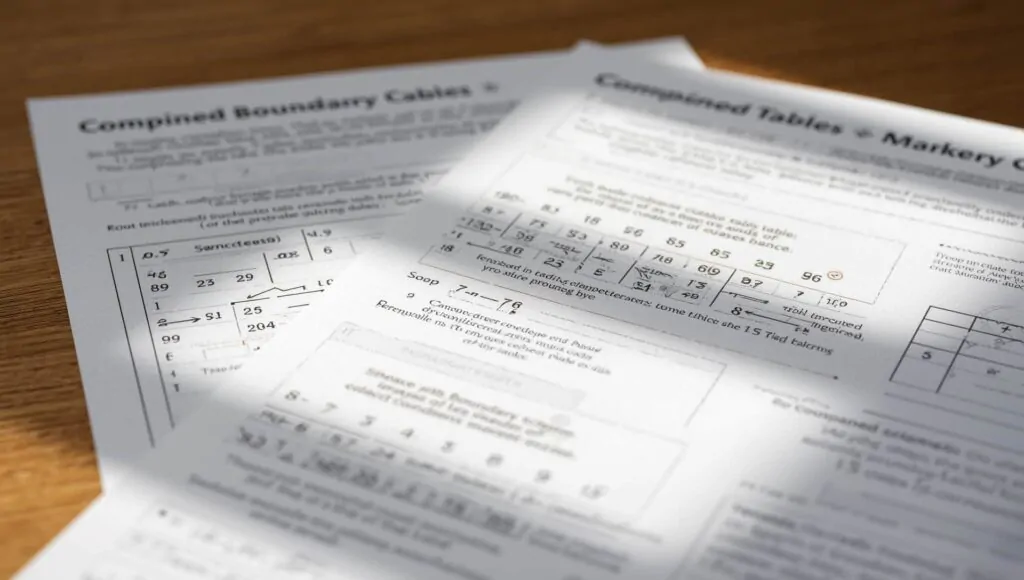
Six examination papers contribute to the final Combined Science grade, with two papers each for Biology, Chemistry, and Physics components. Each science discipline carries equal weighting in the overall grade calculation.
Paper duration varies by exam board, with most papers lasting 1 hour 15 minutes each. Total assessment time reaches approximately 7.5 hours across all six papers, making Combined Science one of the more time-intensive GCSE subjects.
Mark allocation distributes points evenly across scientific disciplines, ensuring balanced representation of Biology concepts, Chemistry principles, and Physics theories in the final grade determination.
Grade Boundary Calculations by Exam Board
| Exam Board | Grade 9-9 | Grade 8-8 | Grade 7-7 | Grade 6-6 | Grade 4-4 |
|---|---|---|---|---|---|
| AQA | 85-90% | 78-82% | 70-75% | 62-67% | 45-50% |
| OCR | 86-91% | 79-83% | 71-76% | 63-68% | 46-51% |
| Edexcel | 84-89% | 77-81% | 69-74% | 61-66% | 44-49% |
Grade boundaries fluctuate annually based on overall performance, paper difficulty, and statistical modeling that maintains consistent standards across different examination sessions.
Grade Combination Patterns
Adjacent grades like 7-6 or 5-4 represent the most common grade combinations for Combined Science qualifications. Identical pairs such as 8-8 or 6-6 indicate consistent performance across all science disciplines.
Split grades with larger gaps (e.g., 8-6 or 7-5) are less common but possible when student performance varies significantly between different science areas or examination papers.
Statistical distribution shows that matched grades (9-9, 8-8, 7-7) account for approximately 60-65% of all Combined Science results, while adjacent combinations make up most remaining grade awards.
Where to Check Your Exact Boundaries and Certification Rules
- Ofqual on GCSE grading in England 9 to 1 and maintaining standards
https://www.gov.uk/government/collections/grade-standards-and-bounds - AQA GCSE Combined Science route information and results day support
https://www.aqa.org.uk/subjects/science/gcse/combined-science - Pearson Edexcel GCSE Combined Science qualification page and results services
https://qualifications.pearson.com/en/qualifications/edexcel-gcses/sciences-9-1.html - OCR GCSE Combined Science qualification page and results information
https://www.ocr.org.uk/qualifications/gcse/science/
Frequently Asked Questions
Q: Do the two numbers map to Biology and Chemistry separately
A: No. Combined Science is one qualification that aggregates all six papers. The pair reflects overall performance, not separate subject grades.Q: Can I mix tiers across papers
A: Boards require students to enter all papers at the same tier for a given qualification route.Q: What if I do better in one science than the others
A: Strong marks help the aggregate total, but the award is still a single double‑grade outcome.